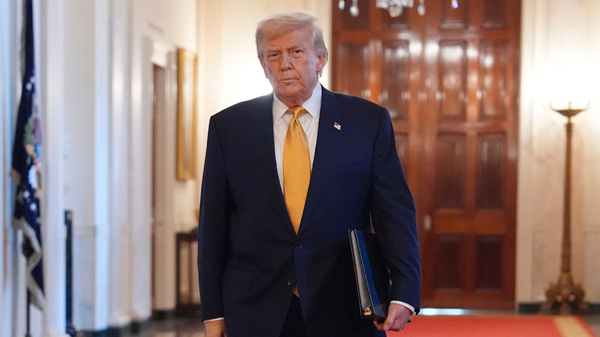
When cardiologist and George Washington University professor Dr. Jonathan Reiner watched Donald Trump deliver a roughly 20-minute public address.
He was not focused on tax policy, foreign affairs, or campaign rhetoric. Instead, his attention was drawn to the presentation itself.
The pace, tone, and physical demeanor of the speaker. What concerned him, Reiner later explained, was not the content of the speech but what he interpreted as an unusually intense and pressured delivery style.
According to Reiner, Trump’s voice appeared elevated, his words came rapidly, and the overall cadence felt accelerated to the point of discomfort.
He likened the experience to listening to an audio recording played at double speed.

For a figure occupying or seeking the highest executive office in the United States, Reiner said, such a delivery can feel unsettling — not necessarily because it proves anything definitive, but because it raises questions about self-regulation, stress levels, and physical stamina.
It is important to note that Reiner’s comments represent personal medical observations, not a diagnosis.
He has repeatedly emphasized that he has never examined Donald Trump and cannot assess his health directly.
Nonetheless, as a physician who has spent decades observing cardiovascular health and stress responses, Reiner argues that the public has a legitimate interest in discussing observable behavior — particularly when it comes from individuals who wield enormous power.
Focus on Behavioral Patterns, Not Policy
Reiner’s concern did not stem from a single moment or speech. Rather, he has pointed to what he describes as patterns of contrast:
moments where Trump appears subdued or fatigued, followed by appearances marked by intense energy and rapid speech.
In Reiner’s view, such swings can appear striking when observed repeatedly in a high-profile public figure.
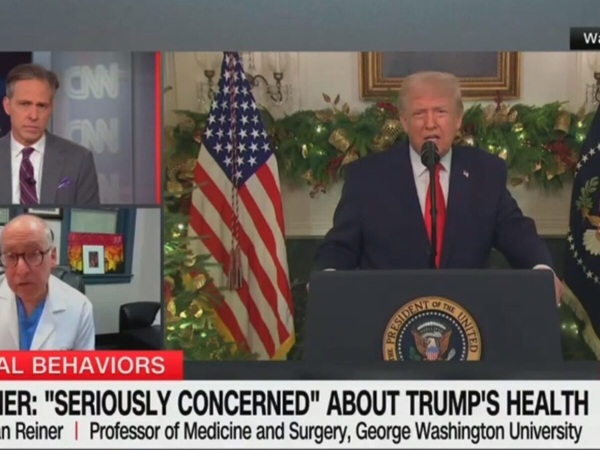
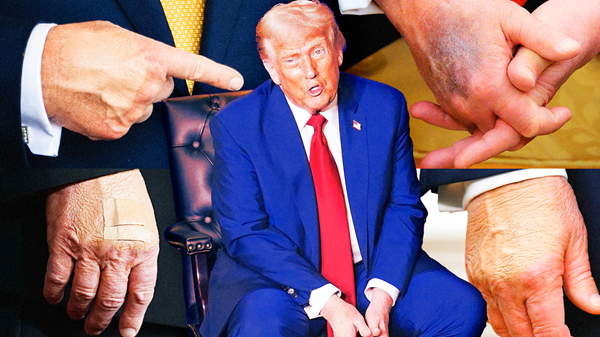
Media reports over time have occasionally described Trump appearing drowsy during long events or meetings, though the White House and Trump himself have consistently dismissed such reports as misleading or politically motivated.
Reiner has referred to these descriptions using clinical language, such as “daytime somnolence,” a general medical term that simply means excessive daytime sleepiness.
Importantly, this term does not imply a specific illness and can be associated with many benign factors, including travel schedules, stress, age, or sleep disruption.
Reiner has suggested that when public officials show visible signs of fatigue alongside moments of extreme intensity, it invites reasonable discussion about workload, stress management, and overall health — not speculation or accusation, but transparency.
The Question of Transparency
Health transparency for U.S. presidents has long been a complicated and controversial topic. Historically, administrations have often minimized or withheld details about a president’s physical or mental condition.
Examples range from Franklin D. Roosevelt’s concealed paralysis to more recent debates over cognitive fitness and age-related decline in modern politics.
In Trump’s case, official medical summaries released during his presidency consistently described him as being in good or excellent health.
These reports were signed by White House physicians and emphasized normal cognitive function.
Supporters argue that these official assessments should be taken at face value and that outside commentary amounts to speculation.
Reiner, however, has argued that official statements alone do not always satisfy public concern, particularly when observable behavior appears inconsistent or raises questions.
He has stressed that transparency does not require revealing every medical detail but should provide enough clarity to maintain public trust.
Stress, Performance, and the Presidency
The presidency of the United States is widely considered one of the most demanding jobs in the world. The role involves long hours, constant decision-making, international travel, crisis management, and sustained public scrutiny.
Medical experts broadly agree that prolonged stress can influence speech patterns, sleep quality, and physical demeanor — even in otherwise healthy individuals.
Rapid speech, elevated volume, and forceful delivery can sometimes reflect adrenaline, anxiety, or deliberate rhetorical strategy, particularly during political campaigns.

Trump, known for his unconventional speaking style, has long favored high-energy performances that resonate strongly with his base. Supporters often interpret his cadence as passion and confidence rather than instability.
Reiner has acknowledged this possibility, noting that political style and personality must always be considered.
However, he maintains that when intensity reaches a level that appears uncontrolled or inconsistent, it is reasonable for observers — especially medical professionals — to comment cautiously on what they see.
Avoiding Diagnosis, Encouraging Discussion
A critical point in Reiner’s commentary is his repeated refusal to diagnose Trump with any specific condition.
He has not claimed that Trump suffers from sleep apnea, cardiovascular disease, or neurological impairment.
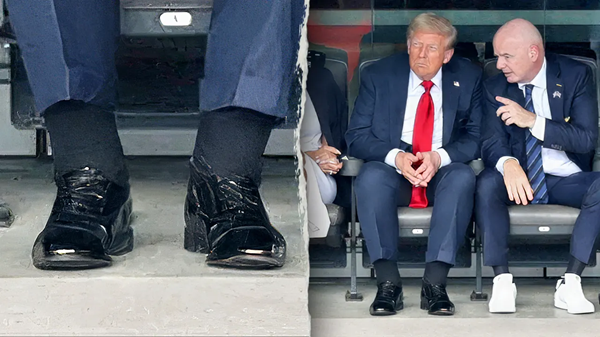
Instead, he has framed his remarks as observational concerns, arguing that noticeable changes in energy, alertness, and speech rhythm are worth acknowledging rather than ignoring.
Medical ethics generally discourage diagnosing individuals from afar, especially public figures.
Reiner has stayed within these ethical boundaries by emphasizing that his role is not to label, but to highlight the importance of health awareness and openness in leadership.
Public Reaction and Political Polarization
Reactions to Reiner’s comments have been sharply divided. Critics accuse him of politicizing medicine and undermining democratic choice by casting doubt on a political figure’s fitness.
Supporters counter that discussing visible behavior is neither partisan nor inappropriate when the individual in question seeks or holds immense authority.
This divide reflects a broader trend in American politics, where health, age, and mental fitness have become increasingly prominent topics.
As political leaders remain active later in life, voters on all sides are paying closer attention to signs of endurance, clarity, and resilience.
The Broader Issue: Leadership and Capacity
Beyond Trump himself, Reiner’s commentary touches on a larger question: How should democratic societies evaluate the physical and cognitive readiness of their leaders?
There is no universally accepted standard, and no perfect method for balancing privacy with accountability.

What Reiner ultimately advocates for is not judgment, but conversation — a willingness to acknowledge what is visible, to ask reasonable questions, and to expect honesty from those who govern.
In his view, ignoring apparent signs of strain does not serve the public interest, nor does sensationalism.
Conclusion
Dr. Jonathan Reiner’s observations of Donald Trump’s speech patterns and apparent energy fluctuations have sparked debate not because they provide definitive answers, but because they raise uncomfortable questions.
His analysis does not claim illness, nor does it assert incapacity.
Instead, it underscores the tension between public perception and official reassurance, between observable behavior and formal declarations of health.
Whether one agrees with Reiner or not, his commentary highlights an enduring reality of modern leadership: the health of those in power matters, and transparency builds trust.
In an era of intense polarization, maintaining a measured, factual, and ethical approach to such discussions may be more important than ever.