The source of the fascination? A nine-year-old girl named Milly, whose curiosity and love for nature led her to discover a black lizard unlike anything veterinarians in the region had ever encountered.
Milly had always been deeply fascinated by the natural world.
Her parents often encouraged her exploratory trips into the forest, hoping to nurture her growing interest in wildlife, insects, and the variety of flora and fauna native to the area.
Over the years, she had learned to identify local species of birds, insects, and reptiles, cataloging her discoveries with meticulous notes and photographs.
Her room was a small museum of jars filled with carefully preserved insects, sketches of leaves, and a few terrariums housing harmless reptiles she had collected under her parents’ guidance.
One crisp autumn afternoon, while the sun dappled through the tall oaks and maples, Milly convinced her mother to allow her a short solo trip into the forest.
Her father, who shared her enthusiasm for natural exploration, supported the idea, emphasizing the importance of giving her a sense of independence and responsibility.
Equipped with a small basket, insect jars, and her ever-present notebook, Milly set off into the woods with cautious excitement.
The forest was alive with the sounds of the season: leaves rustling under her feet, distant birdsong, and the occasional crackle of twigs as small woodland creatures moved through the underbrush.
Milly wandered further than usual, drawn by the thrill of discovery.
It was then, in a shaded, moss-covered section of the forest, that she noticed a shadowy movement near a cluster of ferns.
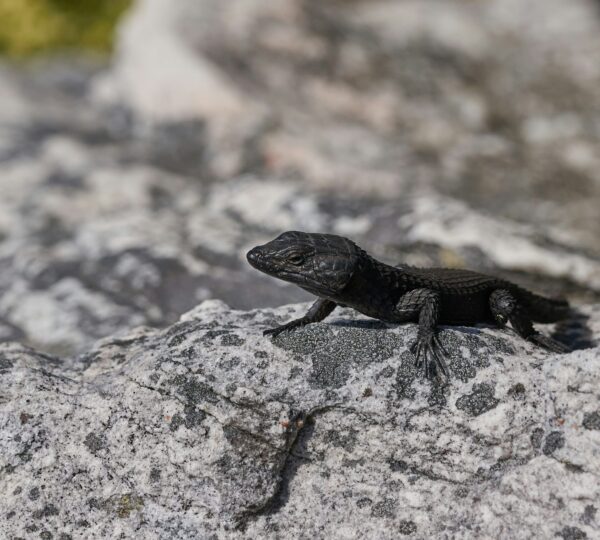
Her eyes widened as she spotted a small, jet-black creature skittering along the forest floor.
At first glance, she thought it was a lizard, but its appearance was so unusual that her curiosity immediately overcame her initial hesitation.
Milly approached cautiously, noting the creature’s glossy scales and unusually long tail. Its eyes, dark and reflective, seemed almost human in their intelligence.
She had never seen a lizard like this before, neither in her guidebooks nor during previous forest excursions.
The lizard’s movements were swift yet deliberate, and despite its small size, it emitted an air of something almost primordial.
After a moment of observation, Milly decided to carefully capture it using an empty jar she had brought along.
She gently coaxed the lizard inside, making sure not to harm it, and covered the jar with a breathable cloth to keep the animal safe during the journey home.
Back in her room, Milly tried to identify the lizard using online resources and wildlife guides, but nothing matched the creature she had found.
Its scales were unlike any common species, its size was atypical, and there were subtle features—like the shape of its limbs and eyes—that did not correspond to the local fauna.
She realized that whatever she had found was extraordinary, and possibly beyond her ability to care for properly.
Despite the uncertainty, Milly felt a deep sense of responsibility.
She wanted to ensure that the lizard was safe, healthy, and treated correctly.
Over the next few days, the lizard appeared to grow weaker. Its movements slowed, and it seemed lethargic, prompting Milly to realize that professional intervention was necessary.
Reluctantly, she approached her parents and asked them to help her contact a veterinarian.
Her father, sensing the seriousness of the situation, agreed immediately, while her mother expressed concern but trusted that the veterinarian would provide the guidance needed.
When they arrived at the veterinary clinic, Milly placed the jar on the examination table and carefully lifted the cloth.
The moment the veterinarian, Dr. Stephen Harris, laid eyes on the black lizard, his reaction was unlike anything Milly had anticipated.
His eyes widened in astonishment, and he leaped back, shouting for both Milly and her father to step away.
“What is this?!” he exclaimed, his voice a mix of disbelief and urgency. Without further explanation, he swiftly stepped out of the room and made a phone call, his tone grave.
Milly and her father exchanged confused glances, unsure whether the lizard was dangerous or rare.
Dr. Harris’s intense reaction was so unexpected that they obeyed his instructions, standing back in stunned silence.
The vet’s urgency made it clear that this was not an ordinary medical situation.
When Dr. Harris returned, his demeanor was serious. “This isn’t just any lizard,” he said. “It’s not native to this country, and it should not be here at all.
You were lucky to find it when you did, but this is far beyond my expertise. I’ve called specialists, and they are on their way.”
Milly’s father asked the veterinarian about potential dangers. Were there health risks? Could the lizard be harmful to her or anyone in the household
Dr. Harris hesitated but reassured them cautiously. “At this moment, we cannot say for certain whether it poses a direct threat.
That is why the experts are coming—they will be able to properly assess its species, its origin, and any risks associated with it.”
The revelation left Milly in awe and slightly frightened. She had thought she was helping a small, harmless creature, but now it seemed that her discovery had far-reaching implications.
She worried that authorities might confiscate the lizard, that it might be dangerous, or that she had unknowingly brought a rare or even protected species into the country illegally.
Dr. Harris then posed two difficult questions to Milly’s father: “Where exactly did you find it, and how long has it been in your care?”
These were not mere formalities—they were critical for tracing the lizard’s origin and determining whether any regulatory or environmental protocols had been breached.
Despite the tension, Milly remained calm. She carefully recounted her solo journey into the forest, describing the location, the conditions, and how she had discovered the lizard.
Her detailed observations, from the shape of the leaves and moss near the discovery site to the lizard’s behavior and diet, proved invaluable.
The veterinarian and later the arriving specialists praised her meticulous attention to detail.
Within hours, wildlife experts arrived at the clinic. They examined the lizard, noting its unique coloration, unusual scale pattern, and distinctive physiological features.
Their preliminary assessment suggested that the black lizard could be an exotic species rarely seen outside its native habitat, possibly a species of tropical reptile that had accidentally been introduced into the local ecosystem through human activity or illegal trade.
Its presence in the forest was alarming to experts, as it could indicate a breach in local wildlife protections or potential environmental risks.
Milly watched in fascination as the specialists carefully handled the lizard, checking its vitals, observing its reactions, and documenting its characteristics with cameras and scientific equipment.
Despite the lizard’s apparent illness, it showed remarkable resilience, remaining alert and responsive to stimuli.
Throughout this process, Milly felt a complex mixture of emotions. Pride in her discovery mingled with concern for the animal’s well-being, and a sense of responsibility for what she had inadvertently brought into the clinic.
She listened intently as the experts explained that the next steps would involve ensuring the lizard’s health, verifying its species, and determining whether it could remain in the country or needed to be transferred to a secure conservation facility.
In the meantime, Milly’s father reassured her that she had done the right thing. “You acted with compassion and responsibility,” he told her.
“Finding an unusual creature is one thing, but making sure it’s safe and properly cared for is another. You handled this incredibly well.”
The incident has since captured the attention of the local community, with neighbors, schoolmates, and online forums sharing Milly’s story.
Her initiative has been praised not only for her bravery but also for highlighting the importance of wildlife awareness, conservation, and ethical responsibility when encountering unknown species.
Experts emphasized that children like Milly play a crucial role in fostering awareness about the environment.
“When young people engage with nature, observe carefully, and act responsibly, it benefits both the individuals and the ecosystems they interact with,” said Dr. Harris, reflecting on the experience.
“It’s rare to see such awareness and patience in someone so young.”
The story has also sparked broader discussions about invasive species, environmental protections, and the challenges faced by veterinarians when confronting unusual wildlife.
The presence of a potentially exotic reptile in a local forest underscores the delicate balance between human activity and natural habitats, and the need for continued vigilance and research.
For Milly, this experience has been transformative. She learned about the complexity of the natural world in ways that no textbook or classroom could provide.
She saw firsthand the intersection of science, conservation, and ethics, and experienced the critical importance of seeking professional guidance when encountering wildlife.
The black lizard, meanwhile, is receiving specialized care. Experts have noted that it will require monitoring and perhaps a controlled habitat to ensure its recovery.
While its ultimate fate remains under review, the lizard’s discovery has already provided scientists with valuable insights into unusual species behavior and the potential impacts of exotic wildlife.
Milly’s parents reflected on the events with pride and admiration. “She has always been curious about animals, but this goes beyond curiosity,” her mother said.
“She has the courage, empathy, and presence of mind to handle situations that would overwhelm most adults.”
Milly herself remains humble. “I just wanted to help it,” she said quietly. “I didn’t expect it to be something special, and I didn’t know it would be so serious. I just want it to be okay.”
This story is a vivid reminder of the wonders and mysteries still present in our forests, the surprises that nature holds, and the power of a single curious child to make a meaningful impact.
It also highlights the importance of education, responsible interaction with wildlife, and the role of veterinarians and conservation specialists in protecting the delicate ecosystems that sustain these creatures.
In the days following the discovery, local schools have expressed interest in inviting Milly to share her experience with classmates, emphasizing environmental responsibility and awareness.
Wildlife organizations have also offered to provide resources and educational materials to help young explorers learn about safe and ethical practices in nature.
For now, the black lizard remains under careful observation. Its discovery has brought excitement, learning, and a newfound respect for the unknown into Milly’s life, as well as the lives of everyone who has heard her story.
What started as a simple forest walk ended in a remarkable encounter with an enigmatic creature, demonstrating that curiosity, courage, and compassion can lead to extraordinary discoveries.
Milly’s story is far from over. She plans to continue exploring, documenting, and learning from the natural world around her.
And while she may encounter challenges, the lessons she has learned from this experience—the importance of care, responsibility, and observation—will stay with her, shaping her approach to life and the natural world for years to come.
The incident has already inspired a wave of interest in local wildlife, sparking curiosity and conversations among children, parents, and educators alike.
One thing is certain: Milly’s encounter with the black lizard is a testament to the enduring magic of nature, the courage of a young explorer, and the extraordinary things that can happen when curiosity meets responsibility.
In the end, this story is not only about a rare and mysterious animal—it is about empathy, science, and the wonder that lies just beyond the familiar path, waiting to be discovered by those willing to look closely and care deeply.