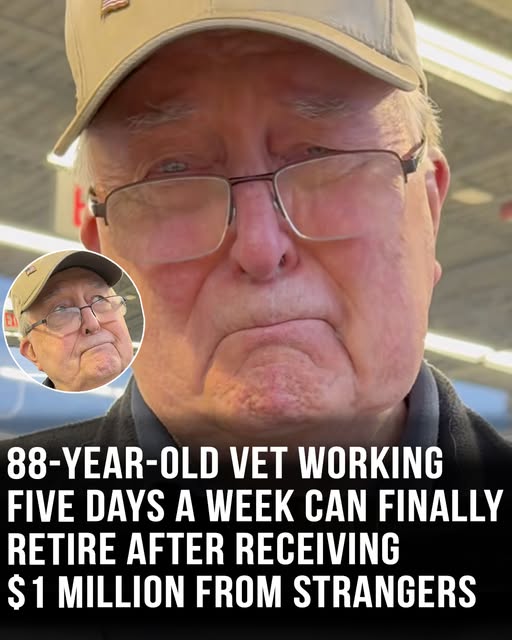
For nearly nine decades, Ed Bambas lived by a guiding principle: serve, work hard, and honor the commitments you make.
Born in a generation shaped by World War II and the post-war American dream, Ed’s early life instilled in him a sense of duty, discipline, and perseverance.
He began his adult life in service to his country, joining the United States Army, where he dedicated years to protecting the freedoms and security of his fellow citizens.
The lessons of the military—resilience, loyalty, and the importance of hard work—remained with him long after his service ended.
After leaving the Army, Ed transitioned to civilian life and built a long career at General Motors (GM), where he worked for decades.
By the time he retired in 1999, he had amassed not just professional experience, but the promise of a secure retirement.
He had a home he owned outright, a pension he could depend on, and the satisfaction of knowing that decades of dedication had brought him stability.

Alongside him through it all was his beloved wife, Joan, whose partnership had been unwavering.
Together, they envisioned a retirement filled with simple pleasures: tending to a garden, enjoying family gatherings, and relishing the knowledge that their shared life had been meaningful, productive, and rooted in love.
Ed believed he had done everything right. He followed the rules, remained loyal to his employers, and invested wisely in his future.
He trusted the system to honor his sacrifices and provide a dignified retirement. But life, as it often does, had other plans.
The Collapse of Security
In 2012, the restructuring of GM—exacerbated by the lingering effects of the 2009 financial crisis—shattered the foundation of Ed’s retirement.
The pension that he had depended on for decades, the one designed to guarantee security in his later years, was suddenly gone.
Health insurance, once a reliable part of his post-retirement life, disappeared almost overnight.
Life insurance policies, which had offered reassurance for the future of his family, were slashed to mere fractions of what they had been.
For Ed, the loss was more than financial—it was profoundly personal. Everything he had worked for, the assurances that had allowed him to plan and dream, was gone.
He found himself confronting the kind of vulnerability he had never expected.
During this tumultuous period, Joan’s health began to decline rapidly.
Medical bills accumulated faster than any paycheck could cover, and Ed was forced to make impossible choices.
The couple sold their home, the very place that had been a symbol of decades of hard work and shared dreams, just to keep up with mounting expenses.
The emotional toll was staggering: watching the life he had painstakingly built dissolve before his eyes, all while caring for the woman he loved, left an indelible mark on his spirit.
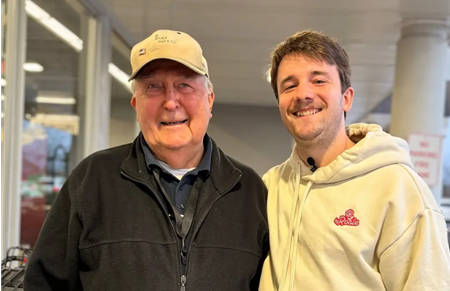
When Joan passed away seven years ago, Ed was left not only widowed but uprooted.
The home, savings, and benefits that had once provided stability were gone, leaving him with little more than his work ethic and quiet dignity to sustain him.
Returning to Work at 88
Most people in their late eighties spend their days resting, reflecting, or enjoying a slower pace of life.
Ed, however, returned to work. He became a cashier at a Michigan supermarket, clocking in five days a week, eight to nine hours per shift. He did not seek promotion or recognition.
He worked because he had to, because survival demanded it, and because he carried an unwavering sense of responsibility and self-reliance.
Each day, Ed would rise early, put on his worn coat, and walk into the store.
Each scanned item, each bagged grocery, carried with it not just the purchases of strangers but a lifetime of perseverance, resilience, and dignity.
Customers often saw an elderly man behind the counter, but those who took a closer look could sense the weight of decades of service, loyalty, and quiet sacrifice etched into every movement.
He worked tirelessly, not for ambition, but to honor the life he had led and to maintain his independence despite overwhelming hardship.
A Stranger, a Camera, and a Spark of Hope
Life has a way of changing in moments of chance. One quiet afternoon, a social media influencer named Samuel Weidenhofer walked into Ed’s lane.
Weidenhofer, part of a growing “positivity influence” movement on digital platforms, immediately noticed something remarkable: Ed’s calm dignity, the way he carried himself despite the visible wear of years and hardship.
“What’s your dream?” Weidenhofer asked.
Ed paused, then answered with quiet honesty, “To live a little, somewhat, the life I was hoping for.”
That brief exchange might have been a small, passing moment—but it became the catalyst for something extraordinary.
Weidenhofer left a $400 tip, and then, recognizing the broader significance of Ed’s story, shared it online.

The video and post spread quickly, resonating with thousands of people who were touched by Ed’s story—a story of service, loss, endurance, and unwavering integrity.
A Nation Responds
The response was immediate and overwhelming. People from all over the United States contributed to a GoFundMe campaign launched in Ed’s honor. In mere days, the fundraising effort surpassed $1 million.
Within weeks, donations climbed past $1.5 million—a collective gesture of recognition, compassion, and gratitude from strangers who understood that Ed deserved more than mere survival.
For Ed, the support was about more than money. It was about recognition—acknowledgment of decades of labor, sacrifice, and resilience.
For the first time in years, he could imagine a future where he could live in comfort, honor Joan’s memory, and finally experience the peace and dignity that had long been promised to him.
Beyond One Man’s Story
Ed’s journey highlights a sobering truth: even those who serve their country and work diligently are vulnerable when systems fail.
Pension collapses, healthcare loss, and financial instability can leave seniors and veterans exposed, regardless of their careful planning or dedication.
His story underscores the fragility of retirement security and the necessity of protecting those who have given so much.
Yet it also shows the transformative power of empathy, community, and modern connectivity.
A single question, a simple tip, and a shared story became a movement, reminding the world that collective kindness can change lives—even in an era often defined by distraction and digital fragmentation.
Most importantly, Ed’s story exemplifies dignity, resilience, and integrity. He never sought pity.
He endured hardship quietly, worked tirelessly, and remained committed to his principles.
In return, he earned not only public admiration but a chance to reclaim the life he had long dreamed of.
A New Chapter
Thanks to the generosity of thousands of strangers, Ed can finally retire.
He can step away from long shifts behind the checkout counter, live with comfort, and enjoy the simple joys of a life earned through decades of effort.
This new chapter honors Joan’s memory, recognizes the sacrifices of countless veterans and workers, and serves as a powerful reminder of what empathy and collective action can achieve.
For Ed, this is more than financial security—it is an affirmation that dignity, hard work, and resilience are valued.
It is a testament to the ripple effect of kindness, demonstrating that a single question, a story shared, or a thoughtful gesture can transform a life forever.
Because sometimes, the smallest acts—an inquiry about one’s dreams, a tip, or simply seeing the humanity in someone—can restore hope, heal wounds, and change the course of a lifetime.