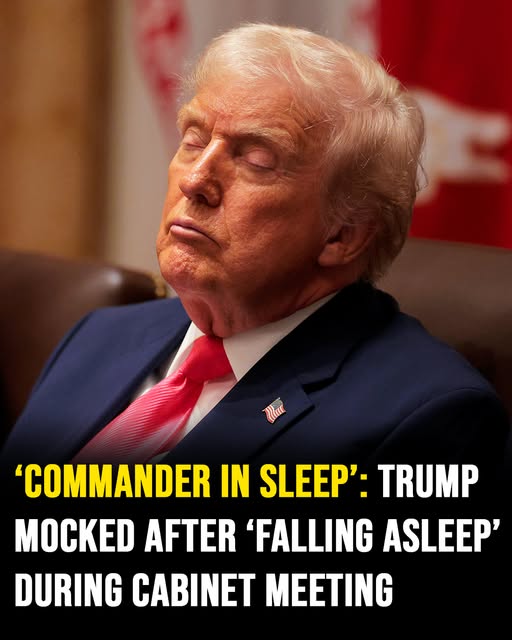
In recent weeks, attention around President Donald J. Trump has shifted from his policy initiatives to a more personal area: his physical stamina and energy levels.
For years, Trump has built his political brand on a persona of relentless energy and tireless work ethic.
His ability to sustain long days of public appearances, high-profile rallies, and constant social media engagement has been central to his image as a vigorous, unstoppable leader.
Now, at 79 years old, observers are questioning whether the president can maintain the level of vigor that defined his first term.
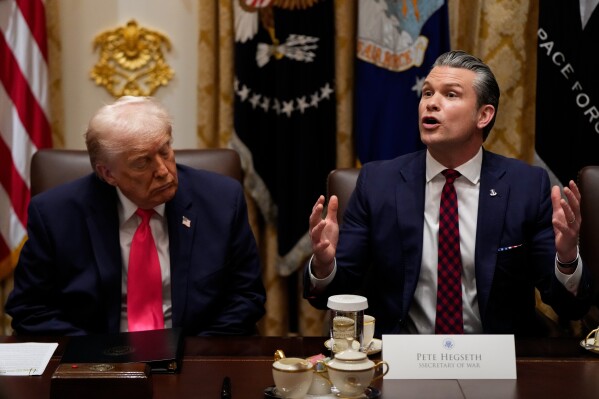
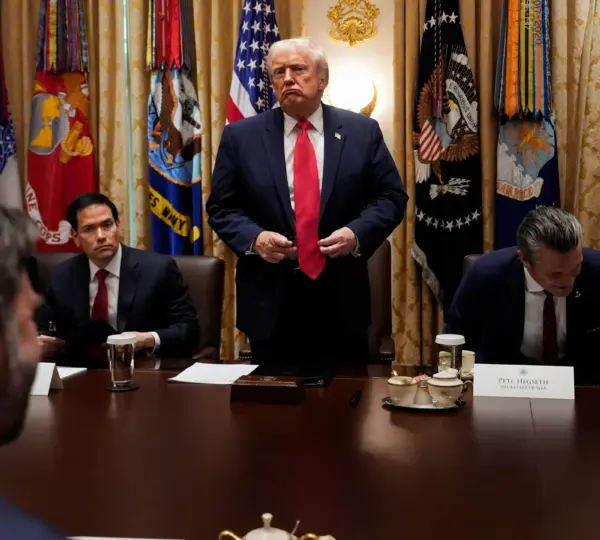
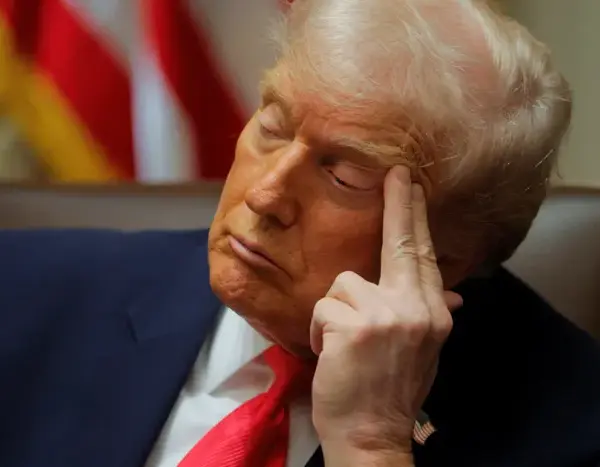
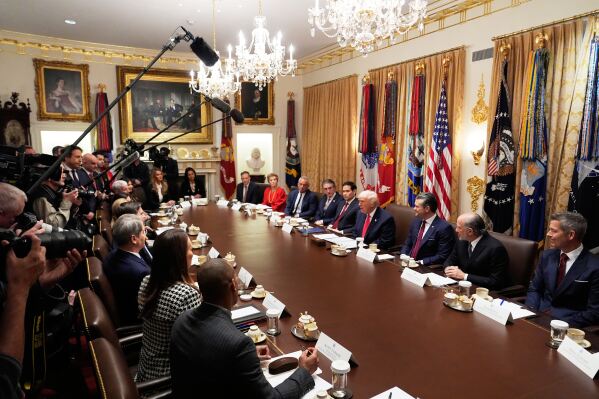
The scrutiny intensified after new photos and video from a Cabinet meeting on December 2, 2025, circulated widely online.
During the roughly two-hour, 17-minute session, Trump was seen with drooping eyelids, occasional head bobbing, and moments when his eyes fully closed as Cabinet members spoke.
Social media users quickly reacted, coining nicknames such as “Dozy Don” and “Commander in Sleep,” while others expressed serious concern about whether the president can sustain the demands of his office.
The optics of these images contrast sharply with Trump’s long-standing persona of tireless energy.
White House allies defended the president, emphasizing that he remained attentive and engaged throughout the session.
Press Secretary Karoline Leavitt insisted that Trump was “listening attentively and running the entire three-hour marathon Cabinet meeting,” highlighting his ability to focus despite the length of the session.
Health Checks and Public Scrutiny
Trump’s stamina and energy have become entwined with public concern over his overall health.
Last week, the White House confirmed that Trump had undergone MRI scans in October 2025 as part of a preventative physical examination, a step framed as routine for a man his age.
According to Trump’s physician, Sean Barbabella, the cardiovascular and abdominal scans were “perfectly normal,” showing no signs of arterial narrowing, organ dysfunction, or other abnormalities.
Despite this reassurance, critics argue that the public release of the results — a summary rather than the full imaging — does not provide complete transparency.
Observers questioned why a president who recently completed an annual physical would require additional, extensive imaging so soon afterward.
These questions were further amplified after Trump’s post-Thanksgiving remarks criticizing Minnesota Governor Tim Walz and others over immigration policy.
In response, Walz called on the president to release the MRI results, a challenge Trump accepted, although he admitted uncertainty about which body parts had been scanned.
He clarified it “wasn’t the brain,” emphasizing that he had passed a cognitive test, which he presented as evidence of continued mental sharpness.
A Shrinking Public Schedule
The concerns about Trump’s energy extend beyond images from a single Cabinet meeting.
Analysts have noted that during the first year of his second term, Trump has maintained a smaller public footprint than during the same period of his first presidency.
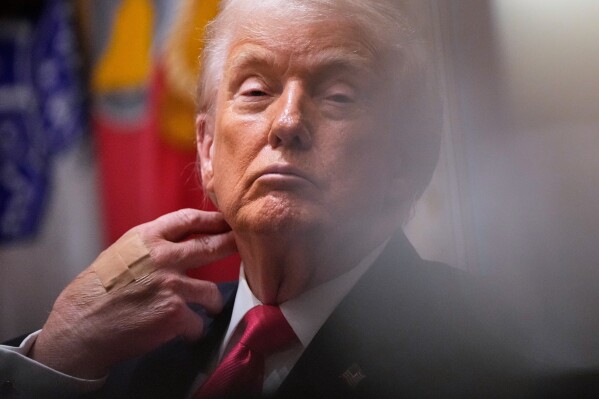
Public calendars and reporting indicate that his official “public days” generally start in the late morning and conclude by early evening.
Compared with 2017, Trump is traveling domestically less frequently, attending fewer public events, and spending more time on focused, private meetings.
While the president continues to maintain a visible presence on television and social media, the reduced intensity of in-person engagements has led observers to question whether his stamina may be waning.
Media analysts have pointed out that long Cabinet meetings, briefings, and travel schedules can be physically and mentally demanding, and images of perceived fatigue feed speculation about Trump’s ability to sustain the high-energy style that became synonymous with his first term.
⚖️ Reactions from Media, Experts, and the Public
Public reaction to the Cabinet meeting images has been mixed.
Social media users and some media commentators mocked the president, while others expressed genuine concern about his physical and cognitive ability to meet the demands of the office.
Conservative outlets and Trump supporters emphasized the White House’s reassurances of excellent health, arguing that brief moments of drowsiness are normal even for high-performing individuals with rigorous schedules.
Political analysts highlight that perception is as important as reality in shaping a president’s public image.
Trump’s brand has been built around stamina, relentless visibility, and tireless energy. Consequently, even fleeting images suggesting fatigue can carry outsized political weight, influencing voter perception, media narratives, and opponents’ messaging.
Experts also note that age naturally affects stamina and recovery, and a 79-year-old president may require adjustments in schedule, travel, and rest.
However, any deviation from the high-intensity image Trump cultivated during his first term is immediately scrutinized, highlighting the tension between public perception and the realities of age and physical endurance.
What We Know — and What We Don’t
Available information establishes several facts:
Cabinet meeting footage shows instances where Trump’s eyes drooped or closed entirely, though the cause remains open to interpretation.
MRI scans conducted in October 2025 were reported as normal, with no abnormalities detected in cardiovascular or abdominal areas.
Full imaging data have not been released publicly, creating gaps in transparency and contributing to speculation.
Unknowns include the president’s detailed sleep and rest patterns, any underlying health conditions not disclosed publicly, and the full context of daily routines that affect stamina in high-pressure situations.
Analysts caution against drawing definitive conclusions from selective images, emphasizing that perception often overshadows objective measures in modern political discourse.
Political and Cultural Implications
The scrutiny over Trump’s energy and stamina underscores how perception shapes modern politics.
For a leader whose persona relies on tireless activity, high-energy rallies, and nonstop media engagement, even subtle indications of fatigue become politically significant.
Public concern about Trump’s stamina could influence media coverage, voter attitudes, and political narratives, particularly ahead of future elections.
Moreover, this discussion highlights broader societal expectations regarding age, leadership, and physical performance.
Trump’s situation reflects the unique challenges faced by older political leaders, where minor signs of fatigue are amplified into national conversation, regardless of actual performance or capability.
Whether public scrutiny will intensify or fade depends on several factors: the transparency of health updates from the White House, Trump’s ability to maintain a vigorous public schedule, and how the media and public interpret future appearances.
Analysts suggest that even brief moments of visible fatigue can become symbolic in political discourse, influencing narratives in ways that extend far beyond individual health.
Historical Context and Precedent
Trump’s case is not unprecedented. Modern presidencies have often faced questions about age and stamina.
For instance, President Joe Biden, elected at 82, has been the subject of similar scrutiny, with public and media interest in his energy levels and cognitive function.
Historically, presidents in their late 70s or early 80s have adjusted schedules and delegate responsibilities to ensure they can meet the office’s demands, balancing perception with practicality.
Trump’s situation highlights the unique challenge of maintaining a high-intensity public image in an era dominated by viral media coverage, social media amplification, and instantaneous public feedback.